
Complete Neighborhoods
What is a complete neighborhood?
A complete neighborhood is a place where people can live, work, and play all in one area. You can walk, roll, or take the bus to school, medical care, stores, parks, or your job. Everything you need is close to home and within a 0.5 mile or 15-minute walk—like groceries, schools, parks, and public transportation. It’s safe, easy to get around, and good for people of all ages. The goal of a complete neighborhood is that it provides convenient access to key quality-of-life resources and amenities for all.
Why do complete neighborhoods matter
Complete neighborhoods make life easier and better for everyone. You don’t have to travel far to get what you need. That saves time and money. They are healthier because you can walk or ride to your destination. Complete neighborhoods can help the planet by reducing pollution and can bring people together, helping to build a strong and friendly community.
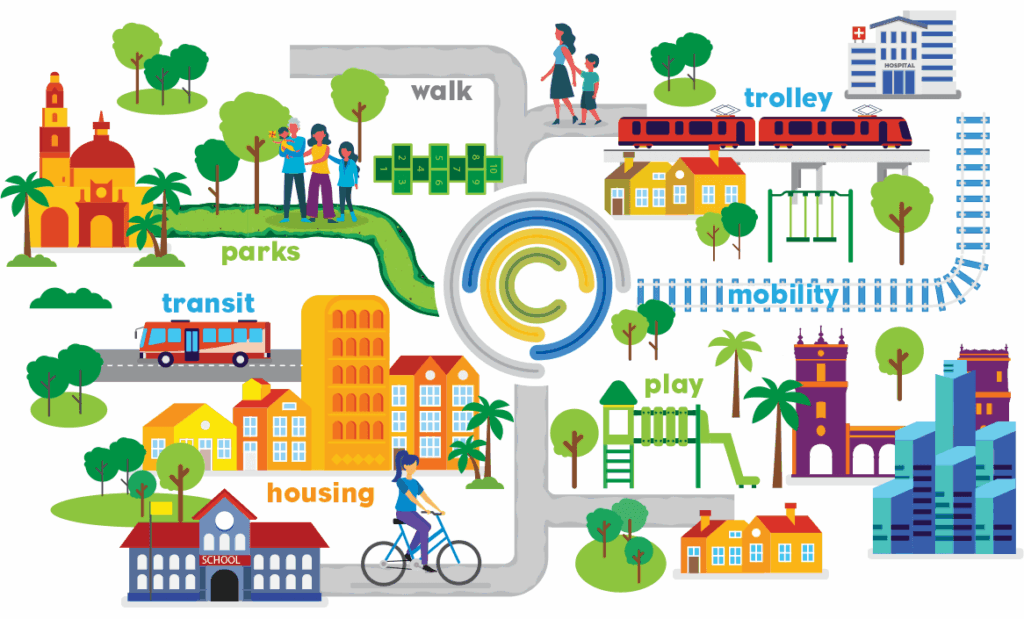
Image source: https://www.sandiego.gov/complete-communities
What you will find in a complete neighborhood
A complete neighborhood has lots of important places nearby, such as:
-
Homes for people of all ages and incomes
-
Schools and childcare
-
Parks and places to play
-
Grocery stores and small shops
-
Bus stops or train stations
-
Sidewalks and bike paths
-
Health clinics or doctors
-
Jobs and businesses
-
Libraries and community centers
All of these things make it easier for people to live happy, healthy lives without needing a car all the time to access these resources and amenities.
Complete Neighborhood Mapping Efforts
The Complete Neighborhoods workgroup, which included community members, neighborhood taskforce partners, MET Transit, and the City Planning Department created a series of maps that help us understand different parts of our community. So far, maps for the South Side Triangle, North Park, and a combined Lower Rimrock and Midtown have been created. These maps show important information like population, age, income, housing costs, public outdoor green spaces, and local amenities. By looking at things like demographics, median age, and access to parks or stores, we can see how complete each neighborhood is—and where there’s room to grow.